


Classical and steel-string acoustic guitars can look similar, but they feel, sound and respond differently. Both produce sound acoustically, yet their strings, necks, construction and typical playing techniques give each instrument a distinct purpose.
Quick answer: choose a classical guitar if you want nylon strings, a wider flat fingerboard and a warm, detailed response suited to classical, Spanish, flamenco and much Latin American repertoire. Choose a steel-string acoustic if you mainly want a brighter, more projecting sound for strumming, flat-picking, folk, country, pop or rock. Neither is universally better; the right choice depends on the music you want to play and the instrument that feels comfortable in your hands.
Classical vs acoustic guitar at a glance
| Feature | Classical guitar | Steel-string acoustic guitar |
|---|---|---|
| Strings | Nylon or carbon trebles with wound basses | Steel strings |
| String tension | Generally lower | Generally higher |
| Fingerboard | Usually wider and flatter | Usually narrower and radiused |
| Common technique | Fingerstyle and independent voices | Strumming, flat-picking and fingerstyle |
| Typical sound | Rounded, warm and detailed | Bright, projecting and sustaining |
| Headstock | Often slotted | Usually solid |
| Common repertoire | Classical, Spanish, flamenco and Latin American music | Folk, country, pop, rock and singer-songwriter styles |
1. Strings and tension
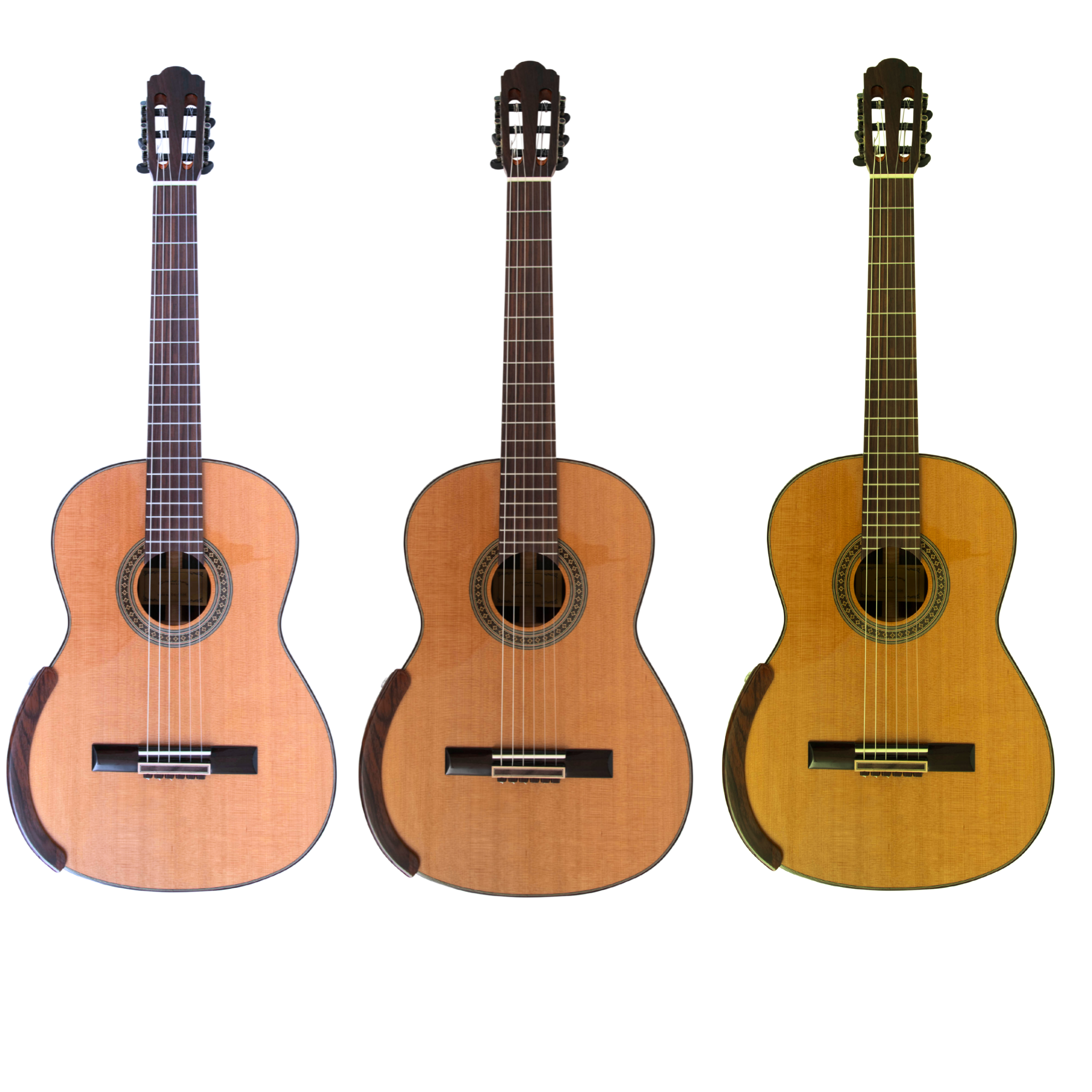
A classical guitar uses nylon or carbon treble strings and wound basses. Their lower tension often feels gentler under the fingers and supports subtle changes of tone. A steel-string acoustic uses metal strings under greater tension, producing more volume and a brighter attack. Steel strings should never be fitted to a classical guitar unless its maker explicitly designed the instrument for them: the additional tension can damage the guitar.
2. Neck width and playing feel
Classical guitars normally have a wider, flatter fingerboard and more space between the strings. That spacing helps the right hand articulate individual voices and gives the left hand room for polyphonic textures. Steel-string acoustics generally have a narrower, curved fingerboard that can feel more familiar for chord shapes, strumming and flat-picking. Exact dimensions vary, so compare individual instruments rather than relying only on the category name.
3. Sound and projection
A classical guitar is usually chosen for a rounded attack, tonal colour and control at quieter dynamics. A steel-string acoustic usually offers a brighter attack, longer metallic sustain and stronger projection for accompanying a voice or ensemble. Construction matters as much as the string material: soundboard wood, bracing, body size, setup and the player all affect the result.
If you are comparing classical-guitar soundboards, read Alba GB's guide to spruce and cedar classical guitar tops.
4. Technique and repertoire
Classical technique normally uses the right-hand fingers separately and places the guitar in a stable position for detailed control of melody, bass and inner voices. Steel-string players may use a plectrum, fingers or both, and often focus on rhythmic chords, riffs and accompaniment. These are tendencies, not restrictions: both instruments support fingerstyle playing, and musicians frequently cross between traditions.
The term Spanish guitar usually refers to the classical or nylon-string instrument, not to every acoustic guitar. Alba GB's separate guide explains why classical, Spanish and concert guitar are names for the same instrument family.
5. Which is easier for a beginner?
Nylon strings and lower tension may feel more comfortable at first, while the wider classical neck can require a larger left-hand stretch. A steel-string acoustic may suit a learner whose main goal is strumming songs, but the higher tension can make new fingertips sore. The best beginner instrument is correctly sized, properly set up and suited to the music that will keep the learner practising.
6. Classical, acoustic-electric and crossover guitars
A pickup does not change the basic instrument type: both classical and steel-string guitars can be amplified. Crossover nylon-string guitars often combine nylon strings with a narrower neck, a cutaway or onboard electronics. They can suit players moving from steel strings, but they do not replace the wider spacing and traditional response some classical repertoire demands.
7. How to choose
- List the music you most want to play.
- Try both instruments seated and, if relevant, standing.
- Compare neck width, string spacing and tension.
- Play single notes, chords and a short fingerstyle passage.
- Listen from in front of the guitar as well as from the playing position.
- Choose a comfortable, well-set-up instrument rather than buying from specifications alone.
If classical guitar is your direction, browse Alba GB's classical guitars. Players comparing materials can also read the Alba GB guide to carbon and nylon classical-guitar strings.
Final choice
Choose a classical guitar for nylon-string response, wider spacing and detailed fingerstyle control. Choose a steel-string acoustic for brighter projection, strumming and styles built around steel-string tone. Many musicians eventually use both, but a beginner will progress fastest on the instrument that matches the music they genuinely want to play.

Leave a comment
This site is protected by hCaptcha and the hCaptcha Privacy Policy and Terms of Service apply.